
- Home
- /
- Chronic Kidney Disease Management
Best Chronic Kidney Disease Doctor in Raipur Chhattisgarh
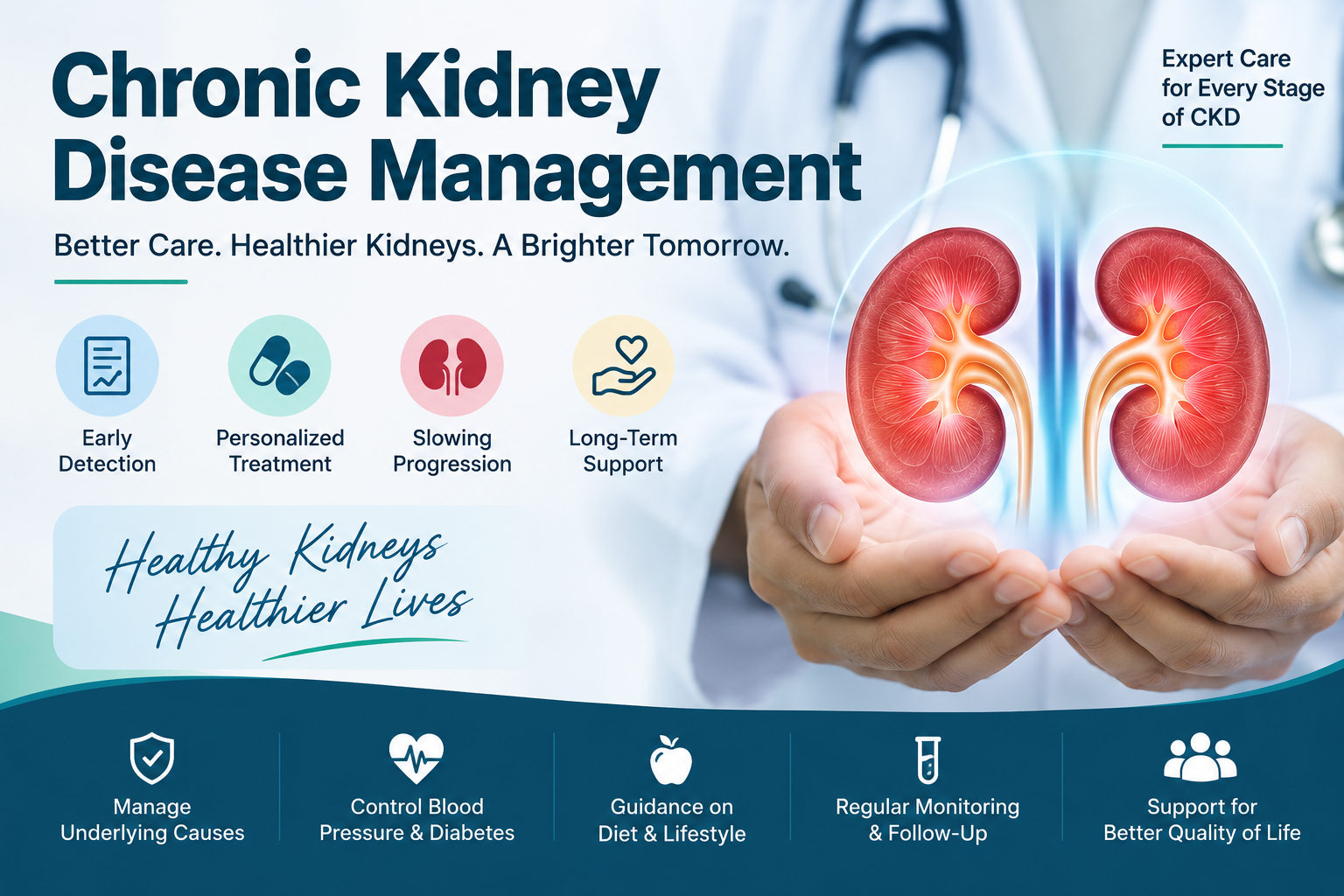
Chronic Kidney Disease Management
Chronic Kidney Disease Management in Raipur
Chronic kidney disease (CKD) is a long-term condition in which the kidneys gradually lose their ability to filter waste and extra fluid from the blood. In the early stages, CKD may not cause clear symptoms, so regular blood and urine tests are important, especially for people with diabetes, high blood pressure, or other kidney-related risk factors.
People searching for the Best Chronic Kidney Disease Doctor in Raipur Chhattisgarh may be looking for a kidney specialist who can provide proper evaluation, regular monitoring, and long-term care.
Dr. Karan Saraf is a Senior Consultant Nephrologist and Kidney Transplant Physician with over 10 years of experience. At Dr. Karan’s Kidney Care Clinic, patients receive personalized care for chronic kidney disease, kidney failure, dialysis-related needs, hypertension-related kidney problems, and kidney transplant care.
The goal of Chronic Kidney Disease Management in Raipur is not only to treat the current condition but also to understand its cause, monitor kidney function, manage related health problems, and help protect remaining kidney function.
- 15+ years in clinical nephrology
- Gold medalist, DM Nephrology
- Published researcher, national & international journals
- 100% kidney transplant success rate
About the Doctor
Meet Dr. Karan Saraf
Dr. Karan Saraf is a Senior Consultant Nephrologist and Kidney Transplant Physician with specialized expertise in kidney care. His focus is on understanding each patient’s condition and providing treatment based on their individual medical needs.
Kidney problems can be different for every person. Some patients may have an abnormal kidney test but no symptoms, while others may have swelling, changes in urination, high blood pressure, or reduced kidney function.
As an experienced Nephrologist in Raipur, Dr. Karan Saraf evaluates the patient’s medical history, symptoms, previous reports, medicines, and other health conditions before planning further care.
Patients looking for the Best Nephrologist in Raipur Chhattisgarh can receive personalized guidance for both new kidney concerns and existing kidney conditions requiring regular follow-up.
What Is Chronic Kidney Disease?
Chronic kidney disease means that the kidneys have been damaged or their filtering ability has remained reduced over time.
Healthy kidneys perform several important functions. They:
- Remove waste products from the blood
- Help control fluid levels in the body
- Help maintain electrolyte balance
- Support healthy blood pressure
- Help with red blood cell production
- Help maintain healthy bones
CKD can develop slowly. Some people may not notice symptoms until kidney function has decreased significantly. This is why kidney function tests can be important for people who have risk factors.
According to current kidney-care guidance, CKD assessment commonly looks at estimated glomerular filtration rate (eGFR) and urine albumin, along with the underlying cause and other clinical information.
Signs and Symptoms of Chronic Kidney Disease
Early CKD may have few or no noticeable symptoms. As kidney function decreases, some people may develop symptoms such as:
- Tiredness or low energy
- Swelling around the feet and ankles
- Puffiness around the eyes
- Changes in urination
- Increased urination, especially at night
- Foamy urine
- Poor appetite
- Nausea
- Itchy or dry skin
- Muscle cramps
- Difficulty concentrating
- Sleep problems
These symptoms can also occur with other health conditions, so they do not confirm CKD by themselves.
If you have diabetes, high blood pressure, a family history of kidney disease, or abnormal kidney test results, discussing your kidney health with a Nephrologist in Raipur can help identify whether further evaluation is needed.
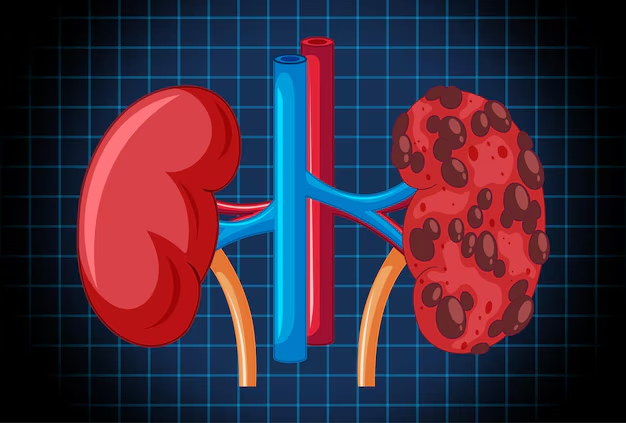
Why Early Chronic Kidney Disease Management Matters
CKD can progress differently from one person to another. Early identification gives doctors an opportunity to understand the cause and create an appropriate management plan.
Current KDIGO guidance emphasizes early detection, assessment of kidney function and albuminuria, identification of the cause, and ongoing monitoring.
Proper Chronic Kidney Disease Management in Raipur may include:
- Regular kidney function monitoring
- Blood pressure management
- Diabetes management
- Urine protein or albumin monitoring
- Medication review
- Dietary guidance
- Lifestyle changes
- Management of CKD-related complications
- Planning for advanced kidney care when required
The treatment plan depends on the patient’s kidney function, CKD cause, other medical conditions, age, medications, and overall health.
Tests Used to Evaluate Chronic Kidney Disease
A Kidney Doctor in Raipur may recommend different tests depending on the patient’s symptoms and medical history.
1. Serum Creatinine and eGFR
Creatinine is a waste product measured through a blood test. The result can be used to calculate eGFR, which provides an estimate of kidney filtering function.
2. Urine Albumin-Creatinine Ratio
The urine albumin-creatinine ratio, or uACR, checks for albumin in the urine. Increased albumin in urine can be a sign of kidney damage.
3. Blood Pressure Monitoring
Blood pressure is important in kidney care because uncontrolled high blood pressure can contribute to kidney damage and can also be affected by kidney disease.
4. Blood Tests
Additional blood tests may be used to check electrolytes, hemoglobin, blood sugar, cholesterol, and other health markers depending on the patient’s condition.
5. Kidney Ultrasound or Other Imaging
Imaging may help doctors evaluate kidney size, structure, urinary tract problems, stones, cysts, or other abnormalities.
6. Additional Tests
In selected patients, a doctor may recommend specialized blood or urine tests, genetic testing, or a kidney biopsy to identify the cause of kidney disease.
Common Causes of Chronic Kidney Disease
There are several possible causes of CKD. The cause can be different for each patient.
Common causes and risk factors include:
Diabetes
High blood sugar over a long period can damage the small blood vessels and filtering structures of the kidneys. Diabetes is one of the major causes of chronic kidney disease.
High Blood Pressure
Uncontrolled high blood pressure can put extra pressure on the blood vessels inside the kidneys. Over time, this may contribute to kidney damage.
Glomerular Diseases
Some conditions affect the tiny filtering units of the kidneys. These diseases may cause protein or blood to appear in the urine.
Repeated Kidney Problems
Certain long-term or repeated kidney conditions can contribute to chronic kidney damage.
Genetic or Inherited Conditions
Some kidney diseases can run in families. A detailed family history may therefore be useful during kidney evaluation.
Other Medical Conditions
Heart problems, autoimmune diseases, urinary tract problems, kidney stones, and certain medications may also be relevant depending on the patient’s individual condition.
A Kidney Specialist in Raipur can help determine the possible cause through medical history, blood tests, urine tests, imaging, and other investigations when required.
Signs and Symptoms of Chronic Kidney Disease
Early CKD may have few or no noticeable symptoms. As kidney function decreases, some people may develop symptoms such as:
- Tiredness or low energy
- Swelling around the feet and ankles
- Puffiness around the eyes
- Changes in urination
- Increased urination, especially at night
- Foamy urine
- Poor appetite
- Nausea
- Itchy or dry skin
- Muscle cramps
- Difficulty concentrating
- Sleep problems
These symptoms can also occur with other health conditions, so they do not confirm CKD by themselves.
If you have diabetes, high blood pressure, a family history of kidney disease, or abnormal kidney test results, discussing your kidney health with a Nephrologist in Raipur can help identify whether further evaluation is needed.
Why Early Chronic Kidney Disease Management Matters
CKD can progress differently from one person to another. Early identification gives doctors an opportunity to understand the cause and create an appropriate management plan.
Current KDIGO guidance emphasizes early detection, assessment of kidney function and albuminuria, identification of the cause, and ongoing monitoring.
Proper Chronic Kidney Disease Management in Raipur may include:
- Regular kidney function monitoring
- Blood pressure management
- Diabetes management
- Urine protein or albumin monitoring
- Medication review
- Dietary guidance
- Lifestyle changes
- Management of CKD-related complications
- Planning for advanced kidney care when required
The treatment plan depends on the patient’s kidney function, CKD cause, other medical conditions, age, medications, and overall health.
Why Choose Us
Why Choose Dr. Karan Saraf?
Choosing a kidney specialist is an important decision, particularly when a condition requires long-term monitoring.
Dr. Karan Saraf is a Senior Consultant Nephrologist and Kidney Transplant Physician providing specialized kidney care in Raipur.
Experienced Kidney Specialist
Dr. Karan Saraf has more than 10 years of experience in nephrology and kidney transplant medicine. His practice focuses on the evaluation and management of kidney-related conditions.
Personalized Care
Every patient has different medical needs. Treatment recommendations are made according to the patient's symptoms, reports, medical history, and overall health.
Comprehensive Kidney Care
Patients can receive guidance for kidney disease, chronic kidney conditions, hypertension-related kidney problems, dialysis care, and kidney transplant-related concerns.
Patient-Friendly Approach
Medical information can sometimes be difficult to understand. Clear communication helps patients understand their condition and participate in treatment decisions.
Tests Used to Evaluate Chronic Kidney Disease
A Kidney Doctor in Raipur may recommend different tests depending on the patient’s symptoms and medical history.
1. Serum Creatinine and eGFR
Creatinine is a waste product measured through a blood test. The result can be used to calculate eGFR, which provides an estimate of kidney filtering function.
2. Urine Albumin-Creatinine Ratio
The urine albumin-creatinine ratio, or uACR, checks for albumin in the urine. Increased albumin in urine can be a sign of kidney damage.
3. Blood Pressure Monitoring
Blood pressure is important in kidney care because uncontrolled high blood pressure can contribute to kidney damage and can also be affected by kidney disease.
4. Blood Tests
Additional blood tests may be used to check electrolytes, hemoglobin, blood sugar, cholesterol, and other health markers depending on the patient’s condition.
5. Kidney Ultrasound or Other Imaging
Imaging may help doctors evaluate kidney size, structure, urinary tract problems, stones, cysts, or other abnormalities.
6. Additional Tests
In selected patients, a doctor may recommend specialized blood or urine tests, genetic testing, or a kidney biopsy to identify the cause of kidney disease.
Understanding CKD Stages
CKD is commonly classified according to kidney function measured by eGFR, together with evidence of kidney damage and other clinical factors.
CKD Stage eGFR Range
Stage 1 90 or higher with evidence of kidney damage
Stage 2 60–89 with evidence of kidney damage
Stage 3a 45–59
Stage 3b 30–44
Stage 4 15–29
Stage 5 Below 15
These ranges are used as part of CKD classification, but a person’s complete medical picture matters. CKD diagnosis also considers whether abnormalities persist over time and whether there is evidence of kidney damage.
For this reason, one abnormal kidney test should not automatically be considered permanent CKD. Your doctor may recommend repeat testing and additional evaluation.
Frequently Asked Questions
If you are searching for the Best Chronic Kidney Disease Doctor in Raipur Chhattisgarh, it is important to consult a qualified nephrologist who can evaluate your kidney function, identify the possible cause of CKD, and provide a suitable long-term treatment plan. Dr. Karan Saraf is a Senior Consultant Nephrologist and Kidney Transplant Physician with over 10 years of experience in kidney care.
Chronic Kidney Disease (CKD) is a long-term condition in which the kidneys become damaged or their filtering function decreases over time. The kidneys may become less effective at removing waste, maintaining fluid balance, and controlling important minerals in the body. Early CKD may not cause noticeable symptoms, which is why regular kidney tests can be important for people at risk.
Common causes of CKD include diabetes, high blood pressure, glomerular diseases, inherited kidney conditions, repeated kidney problems, and certain urinary tract disorders. Diabetes and hypertension are particularly important risk factors. Finding the underlying cause helps a Kidney Specialist in Raipur develop an appropriate treatment and monitoring plan.
Early CKD may have few or no symptoms. As kidney function decreases, a person may experience swelling in the feet or face, changes in urination, foamy urine, tiredness, poor appetite, nausea, itching, muscle cramps, or difficulty concentrating. These symptoms can have other causes as well, so proper medical evaluation is necessary.
A Kidney Doctor in Raipur may recommend blood and urine tests to evaluate kidney health. Common tests include serum creatinine, eGFR, urine albumin-creatinine ratio (uACR), blood pressure measurement, blood sugar tests, electrolyte tests, and kidney ultrasound when required. Additional tests may be advised when the cause of kidney disease is unclear.
Yes. Chronic Kidney Disease Treatment in Raipur depends on the cause, stage of CKD, kidney function, symptoms, and other health conditions. Treatment may include managing diabetes and blood pressure, reviewing medicines, controlling protein in urine, making suitable diet and lifestyle changes, monitoring kidney function, and treating complications.
Yes. Diabetes can affect the blood vessels and filtering structures of the kidneys over time. People with diabetes may therefore need regular monitoring of eGFR and urine albumin. Early detection of diabetic kidney problems allows a Nephrologist in Raipur to assess kidney health and recommend appropriate management.
High blood pressure can damage the blood vessels in the kidneys over time. At the same time, kidney disease can also contribute to high blood pressure. Managing blood pressure is therefore an important part of Chronic Kidney Disease Management in Raipur and may help reduce additional stress on the kidneys.
Chronic Kidney Disease Management in Raipur involves more than treating abnormal creatinine levels. It may include identifying the cause of CKD, monitoring eGFR and urine albumin, managing blood pressure and diabetes, reviewing medications, addressing complications, providing dietary and lifestyle guidance, and monitoring the progression of kidney disease through regular follow-ups.
You should consider consulting a Kidney Doctor in Raipur if you have persistently high creatinine, reduced eGFR, protein in urine, blood in urine, unexplained swelling, recurrent kidney problems, diabetes with kidney concerns, difficult-to-control blood pressure, or a family history of kidney disease. Early specialist evaluation can help determine whether further kidney testing is required.